A Nigerian degree certificate or transcript is now one of the most scrutinised documents a graduate can present — at home and abroad. Employers, the Federal Government's own clean-up exercises, foreign universities, credential evaluators, and embassies all want the same assurance: that the qualification is genuine and unaltered. The problem is that a traditional paper or PDF degree gives them no way to confirm it — so every credential is treated as suspect, and the burden of proof lands on the issuing university's registry.
This guide shows how Nigerian universities, polytechnics, and colleges of education can issue QR-verifiable degrees and transcripts that any verifier can confirm in seconds, at source.
Nigerian degrees are under a cloud — and it isn't only the fakes that suffer
The scale of the credential-integrity problem is no longer in doubt. In December 2023, an undercover reporter exposed how a degree could be obtained from a so-called university in Benin Republic in roughly six weeks — and how the holder could even proceed to NYSC with it. The response was swift: with effect from 2 January 2024, the Federal Ministry of Education suspended the evaluation and accreditation of degree certificates from Benin and Togo, set up an inter-ministerial committee on degree-certificate milling, and signalled the scrutiny could extend to other countries. By mid-2024 the Minister of Education put the number of Nigerians holding fake foreign certificates obtained between 2019 and 2023 in the tens of thousands, and the NUC published lists of institutions under investigation.
Here is the part that matters for legitimate universities: when the system is flooded with fakes and the government is actively flushing them out, the credibility of every genuine Nigerian degree is dragged down with the forgeries. An employer or foreign admissions officer holding a real degree from a real Nigerian university still has to ask, but is this one genuine? — because they have no quick way to tell. Your honest graduates pay the price for other people's fraud unless your institution can prove its credentials are real.
The verification burden falls on your registry
The traditional way to confirm a Nigerian degree or transcript is to contact the university directly — and that creates two chronic problems your registry knows well.
The first is the transcript bottleneck. Foreign universities and credential evaluators such as WES generally insist on receiving transcripts straight from the issuing institution, and graduates routinely wait weeks or months for a transcript to be produced and dispatched. Admissions deadlines and visa windows are missed in the meantime.
The second is the verification workload. Every employer, embassy, or institution that cannot independently confirm a document phones or emails your registry for confirmation. Each of those requests is staff time spent re-proving a document you already issued.
Both problems have the same root cause: your genuine documents carry no way to verify themselves. The verifier has to come back to you, every single time.
What QR-verifiable issuance gives a university
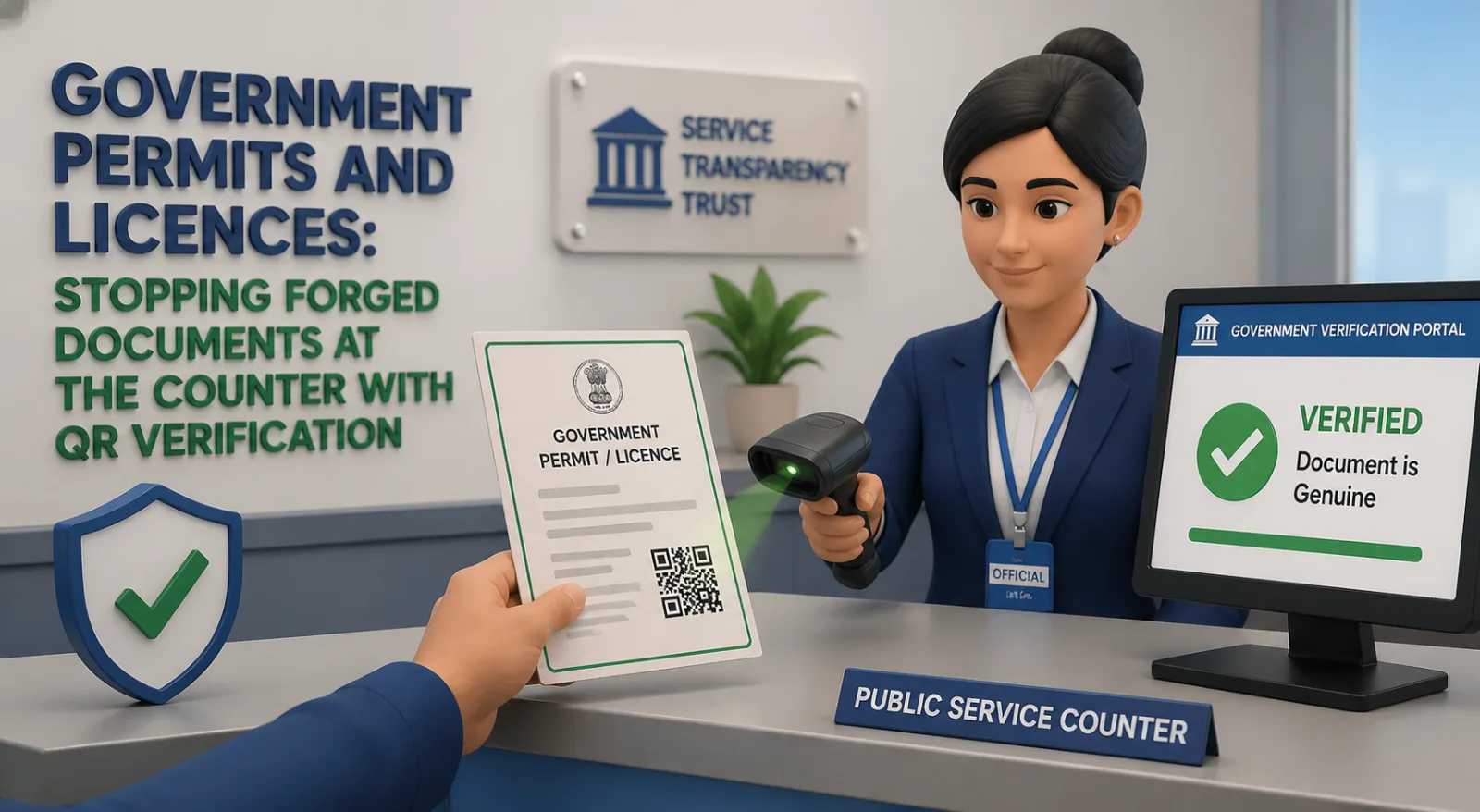
A QR-verifiable credential carries its own proof. Each degree or transcript is issued with a Certificate of Authenticity confirming it was issued by your institution, and a scannable QR code so any verifier confirms it in seconds with a phone — no app, no account, no call to your registry.
It also carries tamper-evidence, so an altered grade, class of degree, or name is detectable, and a hosted proof page the verifier lands on, showing the credential is authentic and unaltered. And it offers long-term verifiability, so a degree conferred today still verifies when a graduate applies abroad years later.
This is the same model WAEC and NECO use for secondary-level results, applied to the credentials a tertiary institution issues. For the verifier's-eye view, see our guide to verifying a degree certificate or transcript with QR codes.
The credentials to make verifiable
These are the tertiary credentials most worth making verifiable, and who relies on each downstream.
| Credential | Who verifies it downstream | Why it matters |
|---|
| Degree certificate | Employers, foreign universities, embassies, professional bodies | The headline qualification — the one most often forged |
|---|
| Academic transcript | Foreign universities, WES and other evaluators | Required for postgraduate admission abroad; the biggest registry bottleneck |
|---|
| Statement of result | Employers, NYSC-related processes, interim applications | Issued before the certificate; used as proof of completion |
|---|
| Certified True Copy (CTC) | High-stakes admissions and legal use | Stronger proof; verifiability removes the re-certification loop |
|---|
| Attestation or completion letters | Banks, embassies, agencies | Used as proof of study or graduation status |
|---|
| PG and professional certificates | Licensing bodies, employers | Same forgery exposure as the primary degree |
|---|
How it works — for the registry and the verifier
For your exams-and-records office, the process sits alongside how you already produce credentials, with verification attached automatically.
Produce the credential — a degree or transcript — through your normal records workflow. Issue it through VerifyDoc.ai, which attaches a QR-backed Certificate of Authenticity and a hosted proof page. Issue in bulk for a cohort, so a full graduating class can be issued at convocation scale, not one document at a time.
The verifier then scans the QR. An employer, foreign university, WES evaluator, or embassy instantly confirms the credential is genuine, issued by your institution, and unaltered — without contacting your registry. And it stays verifiable for the life of the credential, wherever in the world it is presented.
What your institution gains
Defend your institutional reputation. Amid a national fake-degree narrative, being able to prove your credentials are genuine separates your graduates — and your name — from the forgeries. A verifiable degree is a statement that your institution stands behind what it issues.
Improve graduate mobility. Verifiable transcripts and degrees move smoothly through foreign admissions, credential evaluation, and visa checks, instead of stalling in manual verification. That is a direct benefit to your alumni and to your international standing.
Relieve the registry. Verification by scan replaces verification by letter and phone call. Your records office reclaims the hours it currently spends re-proving documents.
Support NDPA accountability. Issuing tamper-evident, verifiable credentials helps your institution meet its data-protection duties, as covered below.
How this fits NUC, NYSC and credential evaluators
To be clear about scope: verifiable issuance is complementary to the existing system, not a replacement for it. NUC accreditation still governs which institutions and programmes are recognised; NYSC mobilisation and Senate-approved results processes continue as they are; and WAEC and NECO results remain verifiable only through their official portals. What QR-verifiable issuance adds is a way for your institution to let the world confirm the specific degree or transcript you issued is authentic — closing the gap between this institution is accredited and this individual document is genuine.
A note on scope for VerifyDoc.ai specifically: it is an issuer-side tool. It lets your university make its own genuine credentials verifiable; it is not a service for checking whether a degree from some other institution is real. The value is in proving your documents.
A note on data protection (NDPA)
Degrees and transcripts are dense with graduates' personal data. Under the Nigeria Data Protection Act 2023, your institution, as the issuer and data controller, must keep that data accurate, protect it against unauthorised alteration, and be able to demonstrate it did so. Tamper-evident, verifiable issuance supports exactly those duties — integrity, accuracy, and accountability — making verifiable credentials an aid to NDPA compliance rather than an additional burden.
Rolling it out at your institution
You do not need to transform everything at once. Start with transcripts, because they cause the worst bottleneck and face the most international scrutiny, so the impact is immediate. Add the next graduating cohort's degree certificates, issued in bulk at convocation.
Train the exams-and-records team once — the issuing step is quick and fits existing workflows. Tell employers, partner universities and evaluators that your credentials are now verifiable by scan, and make it visible. Then extend to statements of result, CTCs, attestations and professional certificates as it becomes routine.
Within an academic session, every credential your institution issues can be one a foreign university, employer, or embassy trusts on sight.
Let the world confirm your credentials are genuine
Give every degree and transcript your institution issues a QR-backed Certificate of Authenticity that employers, foreign universities, evaluators and embassies can scan to confirm it is real, unaltered, and yours. Start free or see how it works.
Related reading: Verifiable result slips and testimonials for Nigerian secondary schools and How to verify a degree certificate or transcript with QR codes.
This guide is for general information and does not constitute legal advice. References to government actions reflect publicly reported events; confirm current NUC, Ministry of Education and evaluator requirements through official sources.