The most reliable way to verify a Nigerian bank statement is to confirm it at the source — directly with the issuing bank, or by retrieving the statement straight from the bank through open banking with the customer's consent. A PDF emailed to you can be edited in minutes; the bank's own records cannot. If you cannot go to the source, a forensic check — does the balance math add up, do the fonts and dates match the bank's real format, what does the file's metadata show — will catch most fakes.
This guide is for lenders, embassies, landlords, and anyone who has to trust a Nigerian bank statement before making a decision.
The fastest reliable way to verify a Nigerian bank statement
Go to the source. Confirm the statement directly with the issuing bank, or pull it from the bank via open banking — do not rely on the PDF alone.
Cross-check the basics. The account holder name, account number, statement period, and the bank's branding should all be internally consistent and match other documents. Then test the math: every running balance should reconcile line by line, and forged statements frequently fail this.
Inspect the file. Check the PDF's metadata and formatting for signs of editing. And when in doubt, do not accept it — a genuine account holder can almost always get their bank to confirm the statement.
Why Nigerian bank statements are forged so often
A bank statement is a single document that proves income, savings, and financial stability — so it unlocks a lot: a loan, a visa, a tenancy, sometimes a job. That makes it a high-value target. And in 2026, fabricating one is trivial: downloadable templates, editable PDFs, and AI tools let a fraudster insert a fictitious salary, inflate a balance, or invent an employer in minutes.
The recipient — a lender, a visa officer, a landlord — is left holding a document that looks right and proves nothing. With Nigerian financial institutions losing ₦52.26 billion to fraud in 2024, as set out in our data on document fraud in Nigeria, a statement you cannot verify is a risk you cannot price. The only real defence is to stop trusting the artefact and start verifying at the source.
Method 1 — Confirm directly with the issuing bank (most reliable)
If you have doubts, contact the bank that issued the statement. Banks can confirm whether the account exists and whether the statement details are genuine. For high-stakes uses — embassy proof of funds, large loans — insist on a bank-stamped statement issued directly by the bank, ideally with a reference number you can quote back to the bank's verification desk. A statement the applicant downloaded and forwarded is weaker evidence than one the bank issues or confirms on request.
Method 2 — Retrieve it from the bank via open banking (best for lenders)
For lenders and fintechs, the strongest approach is to never handle a customer-supplied PDF at all. Nigeria's open-banking framework, driven by the Central Bank of Nigeria, lets licensed providers such as Mono and Okra pull a customer's account data directly from their bank, with the customer's consent. Because the data comes straight from the source, there is no PDF to forge — you see the real transactions and balances. For any lender doing volume, account-linked retrieval is far more robust than analysing uploaded statements one by one.
Method 3 — Run it through statement-verification software
When you must work from a supplied document, AI-driven bank-statement verification tools can help. They use OCR and metadata analysis to read the statement, reconcile transactions and balances, inspect the file for signs of tampering, and flag anomalies far faster than manual review. These tools do not replace source confirmation, but they are a strong first filter at scale — and they catch the high-end forgeries a human eye misses. For the forensic logic behind these checks, see our guide to detecting AI-generated bank statements.
The forensic checklist: red flags of a fake bank statement
When you are checking by eye, these are the tells.
The balance does not reconcile — work down the running balance line by line, and a single figure that does not add up is a giveaway. Unrealistic transaction patterns — round-number deposits, repetitive amounts, or a suspiciously tidy history that does not look like real spending. Fabricated salary credits — a perfectly regular salary from an employer that is hard to corroborate is a classic fake-statement signature.
Formatting inconsistencies — mismatched fonts, blurry or low-quality bank logos, misaligned columns, or spacing that feels off. The wrong statement cycle — transaction or statement dates that do not match the bank's known statement cycle. Missing identifiers — absent account-holder name, account number, statement period, or bank contact details. And suspicious metadata — PDF properties showing edits, a non-bank authoring tool, or a creation date that contradicts the statement period.
Any one of these warrants going back to source confirmation or open banking before you rely on the document.
Guidance by use case
Match the method to your role.
| You are a | Best practice |
|---|
| Lender, fintech, or microfinance bank | Use open-banking retrieval (Mono, Okra) or direct bank confirmation; treat uploaded PDFs as unverified until checked. Cross-check the account name against BVN and KYC records. |
|---|
| Embassy or visa officer | Require a bank-issued, stamped statement with a reference number; confirm with the bank's verification desk for proof-of-funds claims. |
|---|
| Landlord or letting agent | Ask for a bank-confirmed statement, verify any accompanying employment or income letter separately, and be wary of statements that arrive only as a forwarded PDF. |
|---|
| Employer or HR | Corroborate income documents against a second source; do not treat a single PDF as proof. |
|---|
Why this is so hard — and the fix that ends it
Step back and notice the real problem. Every method above exists because of one missing thing: the bank issued the statement without any way for a recipient to verify it. So the burden falls on you — call the bank, wire up open banking, run detection software, or squint at the formatting. The document cannot prove itself, so everyone downstream pays the cost.
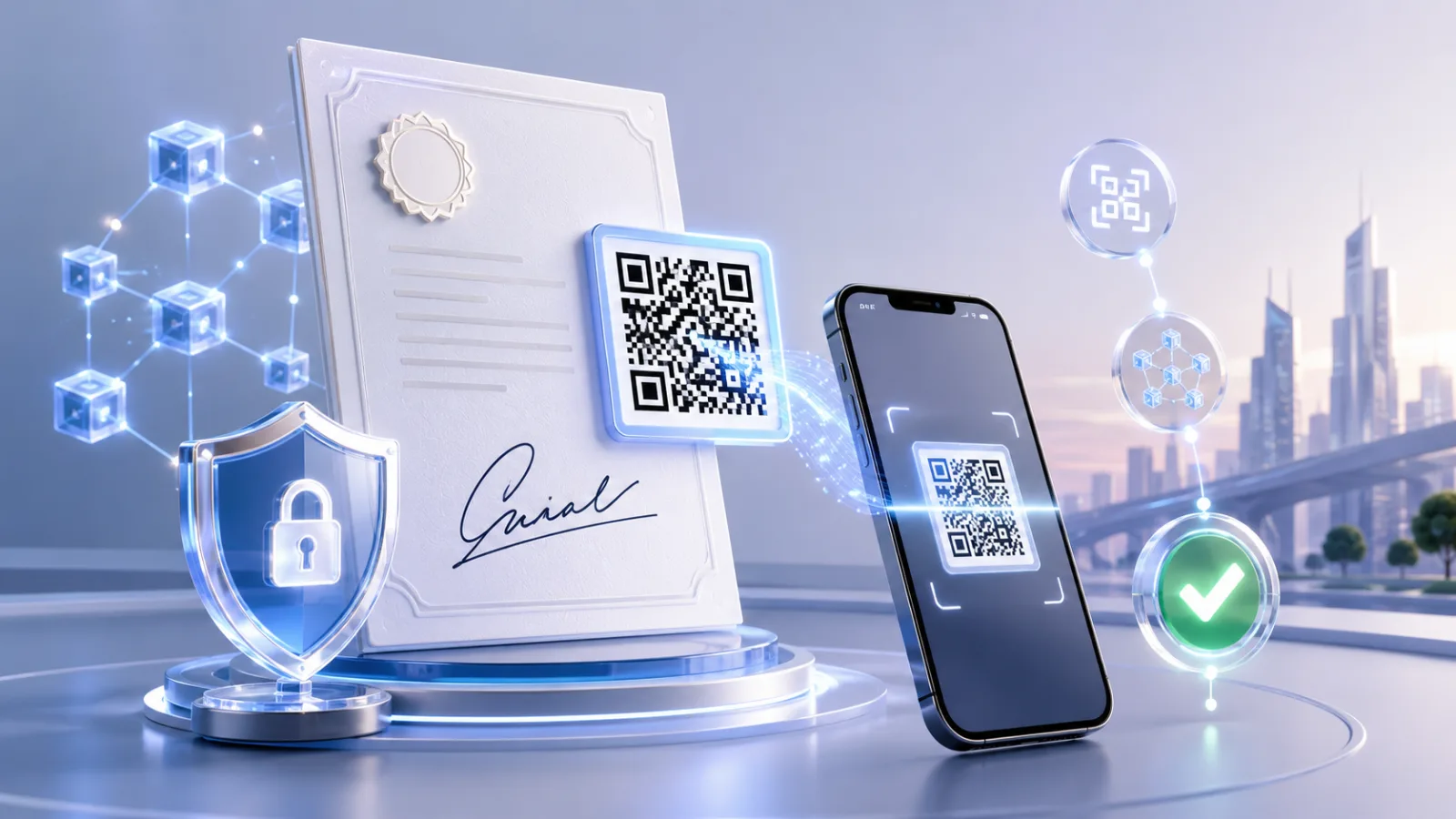
The structural fix is issuer-side verification. When the institution that issues a financial document attaches a way to verify it at source, the whole detective exercise disappears — a recipient simply scans and confirms in seconds. This is the model that already works elsewhere in Nigeria: the CAC public search for company registration, and WAEC Verify and NECO e-Verify for results. The documents that stay easy to forge are the ones with no such mechanism — and most bank statements and financial letters are exactly that.
If your organisation issues financial documents — a bank or fintech issuing statements and balance confirmations, a microfinance bank issuing loan agreements, an employer issuing salary or proof-of-income letters — VerifyDoc.ai lets you attach a QR-backed Certificate of Authenticity and a hosted proof page to each one, so the lender, embassy, or landlord who receives it can confirm it is genuine and unaltered in seconds — no phone call, no forensic check. See our companion guide on verifiable bank statements.
One important point: VerifyDoc.ai is an issuer-side tool. It is not a service for forensically checking a third party's bank-statement PDF, and it does not pull statements from other banks — for verifying someone else's statement, use the source-confirmation, open-banking, or detection methods above. What VerifyDoc.ai does is make the financial documents you issue verifiable, so your customers' statements are trusted on sight. See how it works.
Issue financial documents people can trust on sight
If your bank, fintech, or business issues statements, balance confirmations, or income letters, VerifyDoc.ai gives each one a QR-backed Certificate of Authenticity that any lender, embassy, or landlord can scan to confirm it is genuine and unaltered — no phone call, no forensic check. Start free or see how it works.
Related reading: Document fraud in Nigeria: the 2026 data and landscape and Detecting AI-generated bank statements.
This guide is for general information. Bank, open-banking, and regulatory processes change; confirm current verification procedures with the relevant bank or provider.